

Guide
Do QR code menus still work?
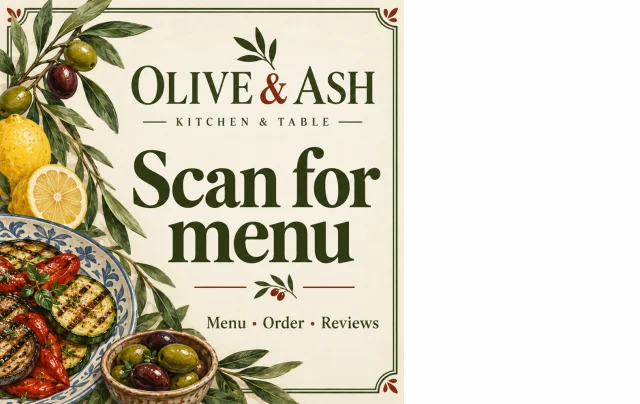
As a replacement for the paper menu, no — diners never warmed to it, and most of the resentment is still fresh. As an addition next to a menu that still exists on the table, yes, and for a specific reason: it is the only version of the code that is optional rather than imposed on the person holding the phone.
What actually annoyed people
The complaint was never really about codes. It was about being handed a screen instead of a menu, at the exact moment somebody wanted to look at a menu, and every specific irritation traces back to that one substitution.
A code that has to be scanned needs a camera, a steady hand and enough light — three things a dim dining room is not generous with, and a phone screen at arm’s length under candlelight is a worse reading surface than a printed card in the same light ever was. A party of four sharing one printed menu becomes a party of four passing one phone around, or four people separately loading the same page, neither of which is how a table decides on food together. And a code-only menu asks something a paper one never did: that everybody at the table has a charged phone, on them, at that moment — which fails exactly when somebody has been out all day and is down to eleven percent.
None of that is a phone being used wrong. It is a menu that used to be an object on the table becoming a task somebody had to complete before they could order, and the resentment was aimed at the task.
Where a code still earns its place
Next to a printed menu, rather than in place of one, the same code stops being an obstacle and becomes an option — and there are jobs a printed menu genuinely cannot do as well.
- A menu that changes daily. A specials board or a chalk list works until there is more to say than fits on it. A page you can edit that afternoon says everything, in full, without reprinting.
- An allergen or ingredient list. Too dense for the main menu, genuinely needed by a real minority of the table, and exactly the kind of detail somebody wants to check privately rather than ask the table about out loud.
- A wine list too long to print at a size anyone can read. A bound list in small type is its own small irritation; a page that can be searched or simply zoomed on a personal screen is not.
The pattern in all three: the code is answering a question the printed menu was never going to answer well, not standing in for a question the printed menu already answered fine.
Why a tap is easier than a scan in a dim dining room
The same failure that sank the code-only menu — a camera, held steady, in poor light — is exactly what a tap does not ask for. A phone touched to a chip needs no aim, no light and no free hand holding it steady while the other one holds a menu; it asks for contact and nothing else. The general case for each mechanism, including where a code still wins on range and reach, is the subject of NFC or a QR code? — worth reading in full if you are deciding between them for a table tent rather than just for the menu question here.
A printed menu still has to exist
Whatever else is on the table, a menu that needs no phone, no download and no account has to be one of the options — not everybody owns a smartphone, not everybody wants to use one at dinner, and a guest who cannot see a small screen well is not helped by moving the text onto one. Treat any digital menu as something offered alongside the paper one, never as a reason to stop printing it.
The link should open a page, never a PDF
The single most common way a digital menu fails on its own terms is pointing at a PDF designed for a printer rather than a phone. A PDF on a phone screen opens at a size nobody chose, forces a pinch to read a single dish, and every subsequent scroll starts the zoom over. A menu meant to be read on the device it opens on should be a plain page laid out for a phone, not a document laid out for a sheet of paper.
What we make, for the addition rather than the replacement
Interested rather than neutral, so read it that way: a Dote restaurant tap card points at a page you host through us, which means a menu that changes weekly, or an allergen list somebody added after opening, does not mean reprinting anything on the table. It is built for exactly the “addition, not replacement” case above — a printed menu stays the main object, and the tap is where the parts a printed page cannot hold well end up.
Put the parts a paper menu can't hold on a tap.
Design a card in a few minutes — no photo required.
See restaurant tap cardsShips in 24 hours · Free tracked shipping · Update the link any time